XPD/USD · platinum-group metal

Palladium Trading Platform: trade XPD with the best offer

Often overshadowed in the media by gold or silver, palladium has established itself as a precious metal of major importance. Represented by the symbol XPD/USD, this hybrid asset combines the prestige of a store of value with the nervousness of a commodity heavily dependent on the industrial sector. Whether you are looking to diversify your portfolio or capitalize on macroeconomic trends, RaiseFX provides you with the infrastructure, liquidity and pricing you need. Regulatory warning: CFDs are complex instruments and carry a high risk of rapid capital loss owing to leverage. A large proportion of retail investor accounts lose money when trading CFDs. This information is descriptive and does not constitute investment advice.
How to open your account and trade palladium in 3 steps?

Our account opening process is fully digital, giving you access to the markets in just a few minutes.

01

Sign up: create your RaiseFX account

Complete our secure application form. Verification of your core information triggers the opening of your access to the client portal.

02

Verify: secure your identity

In compliance with international regulations (KYC), submit a proof of identity and a proof of address. This procedure secures your profile and your future withdrawals.

03

Start trading: place your orders on XPD/USD

Fund your account through our deposit methods (cards, bank transfers, crypto networks), then log in to MetaTrader 5 (iOS/Android mobile and web), search for the symbol XPD/USD and execute your strategy.

The advantages of our offering on palladium

By choosing RaiseFX, you opt for an environment built by traders, for traders, on a market as volatile as palladium.

Unrivalled pricing conditions

Our spreads on XPD/USD are Raw: you benefit from institutional conditions on a market whose price can swing by several tens of dollars in just a few minutes.

No requotes

Your order is executed at the requested price, to the thousandth of a second, thanks to our servers located close to the world's trading hubs.

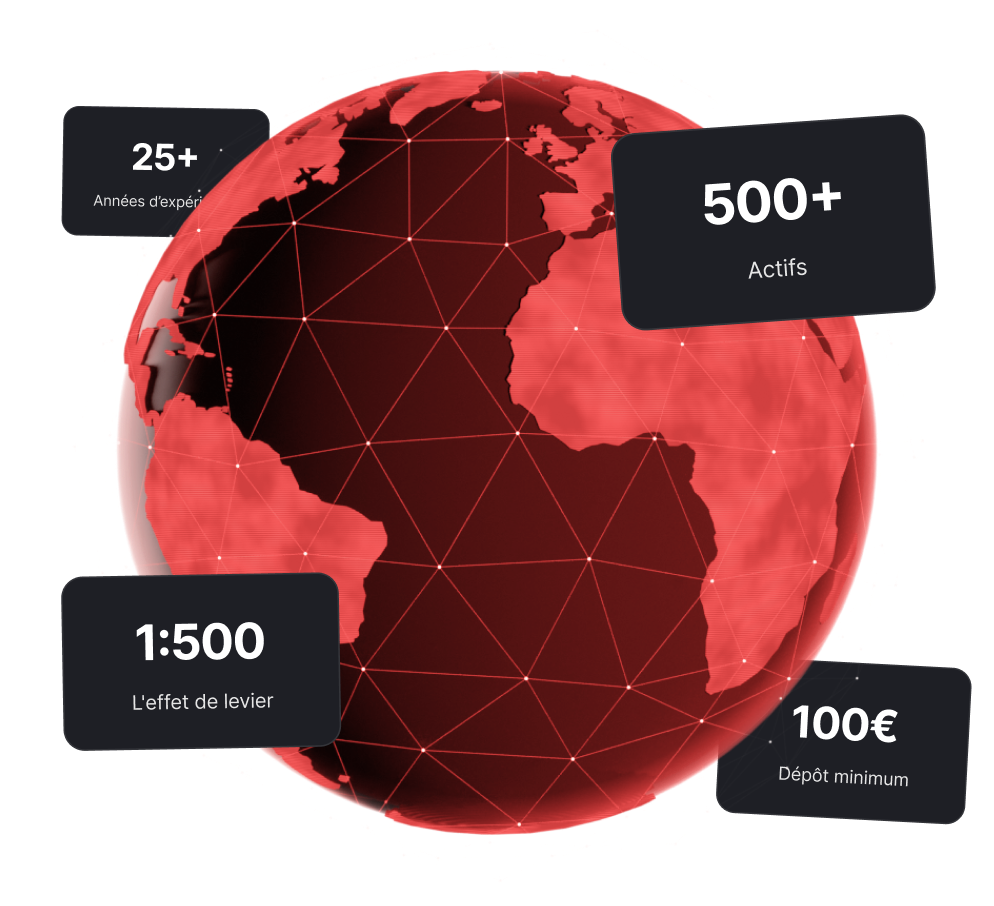
Leverage up to 1:500

Depending on your eligibility and location, leverage of up to 1:500 lets you control a substantial lot size on palladium with a modest deposit.

A trusted regulated broker (FSCA)

RaiseFX is regulated by the Financial Sector Conduct Authority (FSCA), which guarantees the full segregation of funds in top-tier banks while retaining the flexibility of high leverage.

What is palladium? A strategic chemical element

Palladium (chemical symbol Pd, atomic number 46) is an element of the transition-metal family. It is one of the platinum-group metals (PGMs), alongside platinum, rhodium, ruthenium, iridium and osmium. It is a rare metal with a bright silvery-white sheen, discovered in 1803 by the British chemist William Hyde Wollaston.
Geologically, palladium is generally extracted as a by-product of mining other metals, chiefly nickel and copper. The richest deposits are found in igneous complexes such as the Bushveld complex in South Africa and the Sudbury basin in Canada. Extraction is therefore an extremely heavy and costly mining activity.

Industrial and commercial applications

Palladium has exceptional properties: it can absorb up to 900 times its own volume of hydrogen at room temperature, resists corrosion and offers excellent electrical conductivity. These characteristics make it a vital resource for several sectors.

The automotive industry

More than 80% of global production goes into manufacturing the catalytic converters of internal-combustion vehicles (particularly petrol engines), to convert toxic exhaust gases into less harmful substances.

The chemical industry

It serves as a catalyst for many synthesis reactions, notably in the manufacture of plastics, pharmaceuticals and organic compounds.

Electronics

It is used in multilayer ceramic capacitors, connectors and various components of smartphones and laptops.

Jewellery

Sometimes used as an alternative to platinum, or alloyed with gold to create "white gold." Its rising price has, however, slowed its adoption in mainstream jewellery.

The fundamentals of the global palladium market

Unlike gold (often driven by fear and inflation), the price of palladium is governed by an almost purely industrial supply-and-demand dynamic. Global production is characterized by a massive geographic oligopoly: Russia (via Nornickel) and South Africa together account for roughly 80% of global output.
This concentration creates a limited and vulnerable supply. A strike in South African mines, power-infrastructure problems or geopolitical tensions can trigger major supply disruptions, to which the XPD/USD price reacts with extreme nervousness.
Demand is closely tied to the health of the global automotive industry. Increasingly strict environmental regulations (Euro 6, China 6 standards) force manufacturers to raise their palladium loadings. However, the long-term trend is being challenged by the rise of electric vehicles, which have no exhaust systems and therefore no palladium.

The different ways to invest in palladium

Depending on your risk profile, your capital and your time horizon, each method has its own advantages and disadvantages.

Physical palladium

Buying bars or coins offers tangible security, but comes with heavy drawbacks: VAT on purchase, wide dealer spreads, prohibitive storage costs and slow resale.

ETFs and ETCs

A physically-backed palladium ETF replicates the metal's price without you having to store it. These funds do, however, charge annual management fees and depend on exchange trading hours.

Futures and options

Aimed at institutional players looking to hedge, they involve colossal margin requirements and very large standardized volumes, out of reach for most retail accounts.

CFD trading

The go-to tool for active speculation: bet on both rising (Long) and falling (Short) prices on XPD/USD without owning the asset, with leverage, instant execution and fractionable position sizes.

Risk management and technical analysis

Trading a metal as explosive as palladium requires iron discipline. CFDs carry a significant risk of capital loss: inexperienced investors often lose their initial stake because they fail to master the volatility inherent to palladium.
Technical analysis is the cornerstone of short-term speculation. Since palladium tends to form powerful trend channels, mapping historical key levels helps position optimal entries. Because of its sudden acceleration phases, using oscillators such as the RSI or MACD is recommended to identify extreme overbought or oversold zones.
A palladium trader cannot ignore macroeconomic analysis: manufacturing PMI indices in China, automotive sales data in the United States and Europe, inventory reports from mining producers. Palladium can sometimes decouple entirely from gold.
Full FAQ : everything you need to know about trading Palladium (XPD/USD)

Answers to the most frequently asked technical and macroeconomic questions about this precious metal.

Palladium is a silvery-white precious metal of the platinum family, highly sought after by industry (particularly the automotive sector). On over-the-counter (OTC) markets, it is quoted against the US dollar under the symbol XPD/USD. Traders favour it for its high volatility and its powerful directional trend cycles.

Buying physical palladium involves heavy logistical constraints (purchase premium, VAT, vault fees, insurance, slow resale). By contrast, a CFD lets you speculate instantly on the movement of the price per ounce without ever owning the metal. This allows the use of leverage and offers the ability to "short" the market to profit from a price decline.

This historic premium stems from a persistent imbalance between supply and demand. The automotive industry (catalytic converters for petrol engines) has heavily favoured palladium. Faced with constrained mine supply (mainly in Russia and South Africa) and a recurring production deficit, the price logically surged, lastingly exceeding the price of an ounce of gold or platinum.

Palladium is a highly volatile asset, capable of moving by several tens of dollars in a single session. Leverage amplifies your potential gains but symmetrically magnifies the risk of rapid losses. Poor management of your lot size or the absence of a Stop Loss can lead to a very rapid loss of capital. Strict risk management is essential.

RaiseFX provides its services to an international clientele in compliance with its regulatory framework (FSCA). However, legislation varies from one country to another: we are unable to provide services to residents of certain specific jurisdictions. We invite every user to consult our legal documents to check their eligibility based on their jurisdiction of residence.

Both approaches are viable. Day Trading (or Scalping) capitalizes on strong intraday moves and tight spreads to capture quick profits with no overnight risk. Swing Trading aims to capture broad macroeconomic trends (supply shortages, a rebound in the automotive industry) over several days or weeks, relying on in-depth fundamental analysis.

Technical analysis of palladium rests on the same principles as for other assets. Classic chart patterns (channels, triangles, double tops) work very well. Trend traders often use moving averages (SMA 50, EMA 200) combined with momentum indicators (RSI) to identify optimal entry points in the direction of the prevailing momentum.
Palladium, the volatility asset in your portfolio

Palladium is not for passive investors: it is a market of action, responsive and rewarding for those who know how to read it. With our deep liquidity, our institutional execution and the security of our FSCA regulation, you have everything you need to tap into the potential of XPD/USD.